Generative Engine Optimisation: A Guide for Singapore
Type a question into ChatGPT or Google’s AI Overview today, and there is a good chance the answer already features a company’s product, service or point of view, without a single click through to their website. For content teams in Singapore, that shift is no longer a future problem to plan around; it is happening inside real searches, across finance, professional services and consumer brands alike.
This is the territory that generative engine optimisation, or GEO, is built for: the discipline of shaping content so that large language models cite it, quote it or recommend it when they generate an answer. It sits alongside search engine optimisation and answer engine optimisation, not in place of either, but the differences are significant enough that treating GEO as an afterthought risks leaving a brand invisible at the exact moment a buyer is deciding who to trust.
What Is Generative Engine Optimisation?
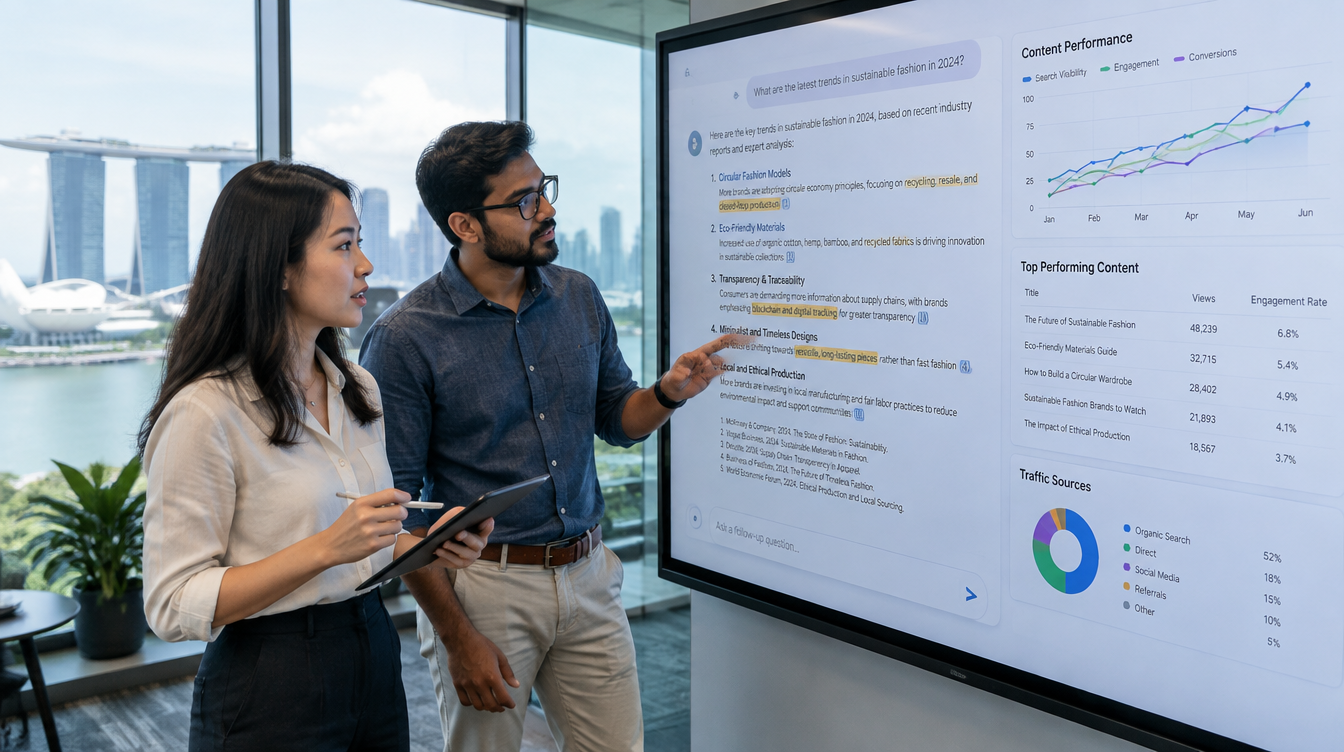
Generative engine optimisation describes the work of making content legible, trustworthy and citable to the large language models behind tools such as ChatGPT, Google’s AI Overviews and Perplexity. Instead of ranking a page on a results list, these systems synthesise an answer from multiple sources and decide, often silently, which ones to credit or quote. Content that is specific, well-structured and backed by evidence has a far better chance of being pulled into that answer than content written mainly to satisfy a search engine’s crawler.
How GEO Differs From SEO and Answer Engine Optimisation
Search engine optimisation and generative engine optimisation share a foundation: both reward relevance, authority and clarity. But traditional SEO optimises for a ranked list of links a person will click through, while GEO optimises for a single generated response the reader may never click past. Position tracking and click-through rate tell only part of the story here; the more useful question becomes whether a brand’s facts, figures and framing actually show up inside the answer itself.
Answer engine optimisation is a closely related discipline, and our guide to answer engine optimisation covers how to structure content so it can be lifted whole into a featured snippet or a voice assistant’s reply. GEO borrows some of those same structural habits, such as clear headings and direct answers near the top of a page, but goes further: it also weighs how a brand is discussed off-site, since generative engines draw on reviews, forum threads and independent coverage as much as on a company’s own pages.
Why This Shift Is Already Reaching Singapore Businesses
Singapore’s own adoption data help explain why this is not a hypothetical concern. According to the Digital Economy Report 2025 from the Infocomm Media Development Authority, AI adoption among small and medium enterprises nearly tripled in a single year, climbing from 4.2% to 14.5% of SMEs, while adoption among larger non-SME businesses reached 62.5%. Momentum like that on the business side tends to be matched on the consumer side, with more Singapore shoppers and professionals starting their research inside an AI assistant instead of a search bar.
For a B2B firm, this changes who gets considered before a sales conversation even begins. A prospective client comparing options might ask an AI assistant to summarise strong content marketing partners in Singapore, or to explain how AEO and GEO differ, and receive a synthesised answer built from whichever brands the model treats as well-documented and credible. A business that has never been mentioned, quoted or reviewed anywhere citable simply will not appear in that answer, however strong its website design or paid search performance might be.
None of this means traditional SEO stops working. Google and other conventional search engines still send meaningful volumes of traffic, and most GEO-friendly habits, such as clear structure, credible sourcing and specific claims, also strengthen conventional rankings. What changes is the need to think about visibility across a wider set of surfaces than a results page, and to treat AI-generated answers as a channel worth measuring, not an unpredictable black box.
What AI Systems Look For Before They Cite You
Search Engine Land’s 2026 guide to GEO offers useful benchmarks for what these systems actually reward. Google’s AI Overviews now appear in 39% of US desktop searches, and large language models typically cite between two and seven sources in a single answer, a far narrower field than the ten links a traditional results page offers. Earning one of those citation slots depends less on keyword density and more on a handful of concrete signals:
- Specific, sourced data instead of vague claims about being an industry leader.
- Content organised around direct questions and equally direct answers, without a long marketing preamble before the substance.
- Visible freshness, such as updated dates or recent examples, instead of static pages left untouched for years.
- Independent validation, including reviews, media coverage and mentions on sites the brand does not control.
- Clear structure, with descriptive subheadings and short paragraphs, that a model can parse and extract cleanly.
None of these signals are exotic. Most are habits that good content teams already practise for human readers, and GEO simply raises the stakes for applying them consistently, across every page a brand publishes, not only a handful of flagship articles.
Building GEO Into an Ongoing Content Practice
Treating GEO as a one-off audit is unlikely to hold up over time, since the underlying models are updated frequently and the sources they favour can shift along with them. A more durable approach folds GEO checks into the same editorial process already used for search engine optimisation: reviewing new content for clear structure and credible sourcing before publication, and periodically checking whether existing pages still hold up when tested against an AI assistant’s own answers. Businesses that build this habit early are simply more likely to be the ones still being cited when the next shift in search behaviour arrives.
Search behaviour is changing faster than most content calendars were built to handle, and no single article can cover every angle of that shift. If your content is due for a review with this new landscape in mind, feel free to get in touch with our team for a fresh perspective on where things currently stand.